
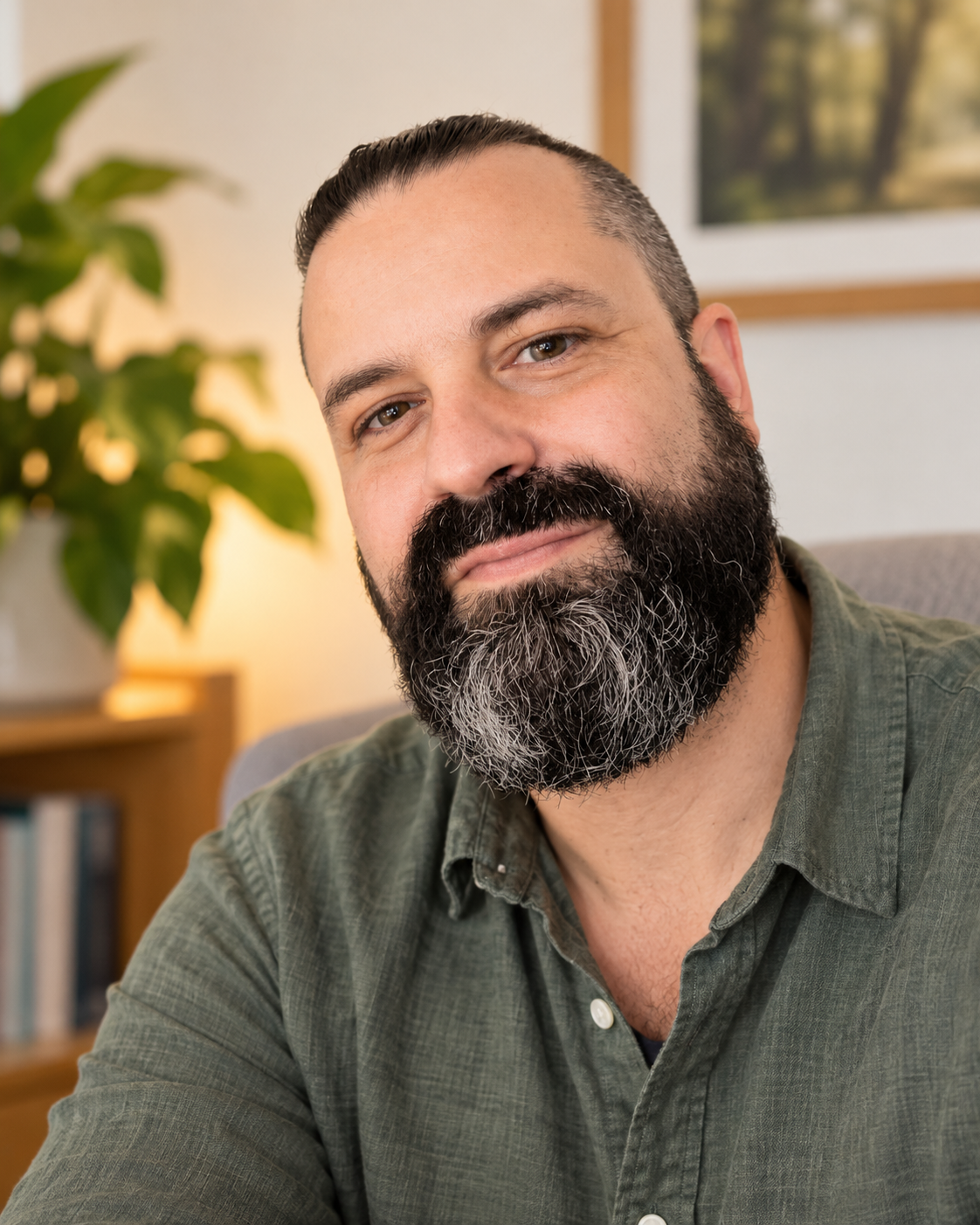
Counselling that starts with understanding you
I’m Leon, an Integrative Counsellor based in Lowestoft, Suffolk. I offer counselling for adults face-to-face from my practice at 76 Wollaston Road, as well as online, by telephone and through Walk & Talk sessions.
People come to counselling for many different reasons. You may already have a clear idea of what you want help with, or you may simply know that something doesn’t feel right. My role isn’t to fit you into a particular way of working, but to understand what is happening for you and what you would like from counselling.
My background and experience
Alongside my counselling work, I have experience working in the NHS as a Mental Health Practitioner. This has given me experience of working with mental health and neurodiversity alongside my therapeutic training.
I have a BA (Hons) in Integrative Counselling, with further training in EMDR, and I am a registered member of ACC.
My particular areas of interest and experience include anxiety, depression and low self-esteem; trauma and complex trauma; ADHD and ASD; stress, overwhelm and burnout; relationship and attachment difficulties; grief, phobias; and experiences of feeling stuck, lost or disconnected.
How I work
My counselling philosophy is integrative and relational. In plain English, that means I don’t believe one type of counselling will suit everybody.
Instead, I can draw from different ways of working according to you, your experiences and what we are trying to understand together. These can include Person-Centred counselling, Gestalt, Internal Family Systems (IFS), trauma-informed ways of working, and creative and psychoeducational approaches.
Where appropriate, I can also incorporate EMDR or the Rewind Technique into our work.
You don’t need to understand any of these therapies before coming to counselling. We can talk about what you are experiencing and decide together what may be useful.
Trauma-informed counselling
When someone has experienced trauma, difficult experiences can continue to affect thoughts, feelings, relationships and everyday life long after the event itself.
My work is trauma-informed, which means we can work at a pace that takes account of your experiences and how they affect you, rather than assuming you need to talk about everything immediately.
Where appropriate, we can also discuss whether a more specific trauma-focused method such as EMDR or Rewind may be helpful.
Neurodiversity
My NHS experience as a Mental Health Practitioner informs my understanding of neurodiversity within counselling.
I work with adults with ADHD and ASD, while recognising that each person’s experience is individual. Neurodivergence can be part of what brings you to counselling, or simply something we take into account while exploring other parts of your life.
Spirituality and meaning
For some people, questions about spirituality, values, identity, purpose or meaning are an important part of understanding themselves.
They don’t have to form part of counselling, but if they are important to you, there is space for them within our work.
Deciding whether I might be the right counsellor for you
Finding a counsellor isn’t only about qualifications or a particular type of therapy. It is also important that you feel able to talk to the person you will be working with.
I therefore offer a free 15-minute telephone consultation. It gives you an opportunity to tell me a little about what you’re looking for, ask questions and get a sense of whether you would like us to work together.